Exploring Lecha Dodi, Part 6: Verse #4 – Hitna’ari

Other entries in this series: Part 1 | Part 2 | Part 3 | Part 4 | Part 5

We continue on to Verse 4:

התנערי מעפר קומי
לבשי בגדי תפארתיך עמי
על יד בן ישי בית הלחמי
קרבה אל נפשי גאלה

In this verse, Yerushalayim appears to respond to the Jews’ exhortations in the previous verse, especially “רב לך שבת בעמק הבכא,” which we explained as the Jews’ complaint that Yerushalayim seeks undue sympathy by remaining enmeshed in tears. Picking up on the קומי of the last verse (קומי צאי מתוך ההפכה), Yerushalayim responds by telling the Jews that it is they, not her, who must take the lead on the redemption process: התנערי מעפר, קומי; shake yourself free of your dust, arise. It is you, Jews, who are responsible for providing me the comfort that is needed before a redemption can occur. קרבה אל נפשי, גאלה; come close to my soul, you who are charged to take responsibility for me! Rav Schwab, in a beautiful explanation of סמיכת גאולה לתפילה, explains that a גואל is not a redeemer but a stand-in, someone who assumes the persona of the object of his responsibility (see, for example, Bamidbar 5:8, ואם אין לאיש גואל). Taken this way, Yerushalayim is reminding the Jews that they are her גואל, her stand-in, and as such it is they who must קום, arise and provide for Yerushalayim her much-needed and long-awaited respite. It is not to elicit sympathy that Yerushalayim remains sitting in the עמק הבכא, but because the Jews have not done their own work (מעפר קומי).

Birnbaum and ArtScroll assume that התנערי stands alone and the word מעפר is connected to the word קומי (thus התנערי, מעפר קומי). Sacks, with an eye to the cantillation in Yeshayahu 52:2, connects מעפר to התנערי rather than קומי (hence התנערי מעפר, קומי).

Let’s look at the original Pesukim which form the basis for this verse of Lecha Dodi:

ישעיהו פרק נב פסוק ב
א) עוּרִי עוּרִי לִבְשִׁי עֻזֵּךְ צִיּוֹן, לִבְשִׁי בִּגְדֵי תִפְאַרְתֵּךְ יְרוּשָׁלִַם עִיר הַקֹּדֶשׁ, כִּי לֹא יוֹסִיף יָבֹא בָךְ עוֹד עָרֵל וְטָמֵא
ב) הִתְנַעֲרִ֧י מֵעָפָ֛ר ק֥וּמִי שְּׁבִ֖י יְרֽוּשָׁלִָ֑ם הִֽתְפַּתְּחִי֙ מוֹסְרֵ֣י צַוָּארֵ֔ךְ שְׁבִיָּ֖ה בַּת־צִיּֽוֹן

Comparing the Pesukim with the song, it becomes only more clear that the reference in our verse is to the Jews, rather than Yerushalayim; notice how the paytan changes the word Yerushalayim in פסוק א to עמי in the song, and cuts off פסוק ב just before the words שבי ירושלים, sit, Yerushalayim. Without those words, the reference becomes ambiguous and can more readily be interpreted as referring to the Jews. In a sense, both Birnbaum and Sacks are correct. The meaning of the verse, which included שבי ירושלים, would require a comma after מעפר (ala Sacks) so that קומי שבי ירושלים can be maintained as a connected phrase. The meaning of the song, however, which does not contain שבי ירושלים, would require a comma after התנערי (ala Birnbaum), since the two words after that contain a complete thought, one directed to the Jews.

Malbim, interestingly, interprets שבי ירושלים not as a command to sit, as Rashi does, but as a reference to the captives (שבויים) among the Jews, who are told here to return:

רש”י
שבי – על הכסא

מלבי”ם
התנערי.
תחלה דבר אל עיר ציון ועיר ירושלים, עתה דבר נגד עַם ציון ועַם ירושלים שהגלו משם, והנה השבי מן השרים והפרתמים אוסרים אותם בזקים ושומרים אותם, והשבי מן ההמון ודלת העם אינם אוסרים אותם, אבל הם הפקר שוכבים על הארץ כבהמות. על זה אומר, “התנערי מעפר קומי שבי ירושלם, התפתחי מוסרי צוארך שביה בת ציון.” כי שביה בת ציון היו השרים והפרתמים, ושבי ירושלים היו ההמון ודלת העם

Bothered as he so often is by a redundancy in the Pasuk that the Rishonim missed, Malbim here distinguishes between two kinds of captives. The שבי ירושלים are the majority of Jews, who sit wallowing in self-pity – “הפקר שוכבים על הארץ כבהמות” – like the Jews accused Yerushalayim of doing in the last verse (רב לך שבת בעמק הבכא). The שבי בת ציון are the Jewish leaders, who are forced to remain in exile by external forces (“אוסרים אותם בזקים ושומרים אותם”). It is interesting that Malbim here exhorts the general populace of the Jews to gladden Yerushalayim by their return, even if the leaders cannot be counted among them.

Writing in the Mossad Harav Kook journal Sinai (#102, pp. 183-196), Yaakov Bazak assumes that this verse is said about Yerushalayim, rather than, as we interpreted, by Yerushalayim. Bazak agrees that the subject is Yerushalayim rather than the Jews (he points out the female verbs קומי, התנערי and לבשי), but he assumes that Yerushalayim is the subject, not the speaker. Consequently, עמי is the very בגדי תפארתך, and he would explain line #2 as an exhortation to “don the clothing of your splendor – [which are] my nation!” Yerushalayim without its people, Bazak explains, is like a woman without her fine adornments. Bazak’s reading lines up neatly with the beginning of the book of Eichah:
ה) עוֹלָלֶ֛יהָ הָלְכ֥וּ שְׁבִ֖י לִפְנֵי־צָֽר ו) וַיֵּצֵ֥א מִבַּת־צִיּ֖וֹן כָּל־הֲדָרָ֑הּ

The final line of our verse, “come close to my soul, serve as its representative,” comes from Tehillim (69:19):

תהלים פרק סט
יז) עֲנֵ֣נִי ה’ כִּי־ט֣וֹב חַסְדֶּ֑ךָ כְּרֹ֥ב רַ֝חֲמֶ֗יךָ פְּנֵ֣ה אֵלָֽי: יח) וְאַל־תַּסְתֵּ֣ר פָּ֭נֶיךָ מֵֽעַבְדֶּ֑ךָ כִּֽי־צַר־לִ֗י מַהֵ֥ר עֲנֵֽנִי: יט) קָרְבָ֣ה אֶל־נַפְשִׁ֣י גְאָלָ֑הּ לְמַ֖עַן אֹיְבַ֣י פְּדֵֽנִי: כ) אַתָּ֤ה יָדַ֗עְתָּ חֶרְפָּתִ֣י וּ֭בָשְׁתִּי וּכְלִמָּתִ֑י נֶ֝גְדְּךָ֗ כָּל־צוֹרְרָֽי

In its original context, this line comes at the end of a string of pleas for Hashem’s mercy, and just before the author gives away the store: למען איבי פדני … נגדך כל צוררי, for the sake of [quieting] my enemies, redeem me … against you are all my enemies. Alongside the personal longing that we feel when we are away from Yerushalayim, there must be considered as well the defamation of Hashem’s Name which that absence causes, as our enemies interpret that absence as representing our abandonment and neglect by Hashem. Put back into the context of our verse, then, Yerushalayim reminds the Jewish גואלים that as long as we are away, it causes revelry among our enemies. Therefore, Yerushalayim pleads that the Jews קרבה אל נפשי, return to my soul, and serve as the agent or stand-in for Yerushalayim on the world stage – the גואל – that we are supposed to be.

Taken as a whole, in this verse Yerushalayim responds to the Jews’ points by offering several of its own: It is your job, not mine, to ensure my happiness (התנערי מעפר קומי); it is your responsibility to serve as the vocal representative of my message on earth, to be my גואל; your captive status is one which is based on self-perception and can be ended at any time (קומי שבי ירושלים); the task which lies before you in comforting me and initiating the process of redemption is one which contains an altruistic need, not just a selfish one, because Hashem, at the same time, is vindicated in the eyes of the world (קרבה אל נפשי גאלה, למען איבי פדני).

Next time we will explore התעוררי, including comparing the final קומי with the earlier two.

Posted in Lecha Dodi, Tefillah | 5 Comments

Frum … or Krum?? – Hiding Bread Before Bedikat Chametz

And now, once again, it is time for our all-too-infrequent consideration of trends and whispers in the Jewish community as seen through the rarified light of actual Halachic analysis. Is it Frum, or is it Krum? As always, there can be no middle ground.

This Week’s Entry: Putting out 10 pieces of bread before Bedikat Chametz. This past week I, along with every other Jew in America, was so blessed as to have had bestowed upon me “The OU Guide to Passover” (link). In the course of reading about Bedikat Chametz (p. 23), I was intrigued by the following give-and-take between the author and himself:

MUST ONE PUT OUT 10 PIECES OF BREAD?
The Ari z”l established the custom of placing 10 pieces of non-crumbly bread around the house to be “found” during the bedika. If it is not feasible to divide the chametz into 10 pieces, fewer pieces may be used. Irrespective of the number of pieces, it is imperative that some chametz pieces be laid out prior to the bedika.

Our discussion will be limited to the second half of the final sentence. Perhaps another time we will have an opportunity to discuss the Frum world’s stubborn misuse of the word “irrespective,” or how anyone could find it “not feasible” to divide the same amount of bread into 10 pieces as opposed to some other unidentified number.

Discussion: In the major Halachic canon, this discussion begins with the Rama:

שולחן ערוך אורח חיים סימן תלב
הגה:
ונוהגים להניח פתיתי חמץ במקום שימצאם הבודק, כדי שלא יהא ברכתו לבטלה (מהר”י ברי”ן). ומיהו אם לא נתן לא עכב, דדעת כל אדם עם הברכה לבער אם נמצא. כל בו

If the Rama (link) discusses this Minhag, why does the OU attribute it to the Gra (link), who came much later? The Gra’s innovation was simply that exactly ten pieces be used, but this nuance is not clear from the OU’s presentation. In any event, the Rama is abundantly clear that it is not “imperative” that one put out pieces of bread. To the Mishna Berura, then:

משנה ברורה סימן תלב ס”ק יג
ומיהו וכו’ – חולק על זה, דאין כאן חשש ברכה לבטלה, דכן הוא המצוה – לבדוק החמץ, ולחפש אחריו, שמא ימצא; ואם לא ימצא, אין בכך כלום! והט”ז כתב עוד, דהברכה קאי על מה שיבער למחר בודאי, מה שישייר מאכילתו, אלא שמהיום מתחיל על ידי הבדיקה, וכנ”ל בסימן תל”א. וכן הסכימו אחרונים לדינא. ועיין בחק יעקב, שכתב דמכל מקום, אין כדאי לבטל מנהג של ישראל, ועיין שם שנתן טעמים להמנהג. וגם האר”י ז”ל כתב מנהג זה ושיניח יו”ד פתיתים, אכן יש ליזהר הרבה שלא יאבד אחד מן הפתיתין, ועיין בשערי תשובה

The Sha’arei Teshuva cited at the end makes the important caveat that the pieces that are put out should be less than a k’zayit, which would have been an important point for the OU to have made. But in any event, while the Mishna Berura begrudgingly accepts the Minhag (it is hard to picture him jumping for joy as he writes that “אין כדאי לבטל מנהג של ישראל”), he sure doesn’t come anywhere close to saying that it is “imperative.”

The OU is not alone in promoting this latter-day Minhag to the status of absolute Halacha. In the back of “The Complete ArtScroll Pesach Machzor,” we are taught the following (p. 1126):

It is customary to put out [ten] pieces of chametz where they will be found during the search so that the berachah should not have been recited in vain in case no chametz is found.

Dangling modifier aside, there is an inherent inequality between the beginning and end of that quote. It’s just customary, so don’t worry – unless you’d like to run the likely risk of making a berachah l’vatalah. Of course, the Mishna Berura, which they selectively ignored, says just the opposite – that there is no risk of having recited a berachah l’vatalah either way. But without that information, you can decide whether you would like to adapt this Minhag yourself or encounter the serious possibility of having made a berachah l’vatalah. Choose wisely.

Verdict: Frum. However, while this is certainly a well-established Minhag, it is far from “imperative,” and there is no risk of having made a berachah l’vatalah either way. This discussion animates me because it illustrates two negative tendencies that I have observed in the Orthodox community. One is the hamstringing of those less textually adroit in our community into making decisions that the educated few know are not objectively correct. Assuming the folks at the OU can read a Rama, and the people at ArtScroll can read a Mishna Berura, there is no legitimate reason to have misled so many people who cannot do either of those things. (Although by citing the Gra instead of the Rama, the OU also limited the number of people who would find the Rama anyway.) The other tendency is the canonization of Minhag into absolute Halacha. As a teacher, I emphasize Shalshelet Hamesorah, the integrity of the Halachic process; but we cloud this process when a Minhag specifically noted as optional by the Rama becomes misattributed to the Gra and then labeled as “imperative.” In an honest Halachic system, the Gra did not have carte blanche to unilaterally devise mandatory Minhagim for the rest of the Jewish nation. How could something 300 years old be “imperative” anyway? What of all the generations before that which never heard of this Minhag?

I’ve been thinking this year that hiding colored pieces of paper would accomplish the purpose of ensuring that the Bedika was thorough while mitigating the problems of shedding chametz throughout the home or of lost pieces turning into chametz. Furthermore, the Rama’s Minhag presumed that the searcher would not merely look for the hidden pieces (something else the OU could have mentioned), but people’s tendency to do exactly that creates an actual beracha l’vatalah in many homes every year. Colored pieces of paper could potentially create the same problem, except for the fact that it is so obvious that colored pieces of paper are not chametz that a reasonable person would more likely remember that these pieces are merely a way to ensure that the search overall is successful, as opposed to being the very object of the search. With pieces of bread, as many have observed before me, that very real confusion exists. A similar game: hide pieces of a Kosher for Pesach chocolate bar. The pieces that are found can be eaten by the searcher; the ones that are not found can be eaten by the hiders.

But please, for the record, a note to anyone writing a Halachic work who may come across this post: do not call these ideas anything more than quaint suggestions. They are not imperative, and ignoring them will not lead to anyone making a beracha l’vatalah, or to mixed dancing. These are just my own little ideas, for anyone who wants them, take it or leave it. ואני ואת נפשי הצלתי.

Posted in Communal Matters, Frum ... Or Krum??, Pesach | 2 Comments

I Totally Live This: Reflections on the Upcoming Israeli Civil War

As background to this post, one might benefit from reading the actual new Israeli Draft Law (link). I am working on a separate post which will serve as a guide to reading this law, which will appear foreboding to us Americans at first but is actually manageable. I also found this article (link) to make some important points.

A friend of mine posted this now-famous photo on her Facebook page. You’ve probably seen it, too. It’s gone viral, at least in the Jewish sense.

yeshiva soldier costume

Her comment was “I totally live this.” I knew she meant “love,” but I commented back that I thought the typo was appropriate. This is a statement of our lifestyle. This synthesis is what we believe in; it is what, each in our own way, we do every day. In my own way, I live this, too.

Obviously Megillat Esther was written by Maskilim, the early Reformers. I’m sure it’s not read or studied in Chareidi neighborhoods. Ever notice all the fighting and self-defense the Jews do in the second half of the book? Heretics – why don’t they just study Torah? Didn’t our ancestors know that that was the best form of self-defense? I’m sure Mordechai would have listened to about thirty seconds of that before he summarily chopped off their heads. We don’t mess around with self-defense. When our children hurt themselves on Shabbat, we jump in a car and drive to the hospital. And when our Land is in peril, as it so very much is today, we run to the nearest enlistment office the day we turn 18.

I don’t see Mordechai – or Dovid Hamelech, Shaul, or even Yehoshua “Vihigita-Bo” Bin Nun – making compromises on the deferment age for full-time Torah learners, or pushing off meting punishments to draft dodgers by three years, or pledging camel-loads of money to Yeshivot who obey the law by encouraging their students to actually defend Eretz Yisrael. And if they had, any ensuing “yellow star” comments would have been dealt with quickly and harshly. Torah was important to them, too, but there’s something called Hishtadlut in this world. The rest of the country aren’t sadists. They don’t want their children to die. And nobody wants the children of Chareidim to die, either. But they are living in Eretz Yisrael now, not Poland or Russia, and the Galut mentality that someone else will defend their country, or that defending their country comes with inherent religious perils, has to end before our time in Eretz Yisrael does.

I know it seems strange to address my disagreement with the Chareidi community in a blog post, what with their aversion to technology and internet use and the fact that any free time they might have after a full day of learning Torah would be spent learning even more Torah. (link) (link) (link) (link) (link) (link) (link) (link) (link) (link) But those of us who live this synthesis need to remind ourselves of its importance. Last year I wrote (link) that Yom Kippur is preceded by a day of eating, and Yom KiPurim by a day of fasting, to emphasize that neither the physical nor the metaphysical approach to Hashem’s door is possible without an infusion of the other. Either approach in isolation is doomed to fail. At the climax of Yom Kippur, we feel a sense of clarity as we cry out in our hunger. At the climax of Yom KiPurim, we feel that same sense again as we cry out in our drunkenness. That fusion, that synthesis, seems lacking in the Chareidi mindset.

What will someday confuse historians about the coming Israeli Civil War is that it will be fought between secular nationalists for whom protecting the Land of Israel is of paramount importance, and religious zealots whose sole purpose in life is to learn Torah so as to hasten the coming of Moshiach when we can – wait for it – return to the Land of Israel and reclaim our homeland. It’s like the American Civil War, if that war had been fought between slave-owning Northerners and freedom-fighting Southerners. The irony runs deep. Shouldn’t the Chareidim be preaching to the rest of the country about the importance of fighting for the Land of Israel? Isn’t that one of the Jewish values that we waited for all these millennia? It may be hard to recognize, having been away for so long, but I’m pretty sure this is what it was that we were asking for that whole time. How did fighting for and protecting the Land of Israel become a mark of secularism, or an anti-religious value?

Rav Soloveitchik famously compared our ignoring Hashem’s knock on the door (קול דודי דופק) to the events of 1948 and 1967. (link) But perhaps another analogy could be the welcoming area at any major airport, where the newly arrived first encounter and embrace their friends and relatives. Imagine a scene in which one’s long-lost son arrives, ready to run into the embrace of his beloved father. But because they have been away so long, neither recognizes the other. So after a few minutes, figuring that no one has come to pick him up, the son hails a cab and drives away, while the father, figuring his son did not make the trip after all, gets in his own car and drives away. The connection can only be forged if there is some semblance of familiarity; if the distance has been too great, they hold no hope of recognizing each other. Perhaps we have been away from our Land for so long that our most basic, obvious, and elemental obligation to it has been lost to many. We have taken the flight, landed safely, and are inches away from the loved one we wrote love letters to for centuries – and yet through the millenia of neglect, we have become so unfamiliar as to not even realize how close we are. This is worse than קול דודי דופק; this is ממעיך יפרדו. This is having opened the door – and then closed it again because we thought the one knocking was the town beggar, not our own child. That is the greatest tragedy of all.

There is a beautiful Midrash (Bereishit Rabbah, 39:8) which provides an interesting account of what made Avraham want to live in Eretz Yisrael:

בשעה שהיה אברהם מהלך בארם נהריים ובארם נחור ראה אותם אוכלים ושותים ופוחזים (being reckless), אמר – הלוואי לא יהיה לי חלק בארץ הזאת. כיוון שהגיע לסולמה של צור ראה אותם עסוקים בניכוש (weeding) בשעת הניכוש, בעידור (tilling) בשעת העידור. אמר – הלוואי יהא חלקי בארץ הזאת. אמר לו הקב”ה – “לך אתן את הארץ הזאת.”

Avraham wanted a Land which would require work, toil, effort, and labor. If it was a place in which he and his descendants could eat, drink, and play without having labored to achieve those ends, he wanted no part. Interestingly, in the Midrash, Hashem only promises Avraham the Land once He sees that Avraham has come to that realization on his own. If Avraham had not held such a value himself, if it had had to be forced upon him, then that message would not have stuck with him or with his descendants. From the moment near the end of the Book of Bamidbar in which we are adjured to fight for the Land – וְהוֹרַשְׁתֶּם אֶת הָאָרֶץ וִישַׁבְתֶּם בָּהּ כִּי לָכֶם נָתַתִּי אֶת הָאָרֶץ לָרֶשֶׁת אֹתָהּ – until the end of Tanach, there is perhaps no more consistent theme than our need to fight for and defend the Land of Israel. Our time away may have obscured that need in our minds, but it has not changed it materially.

None of this should detract from the very real effect that Torah learning has on our national self-defense. But the defensive stance that the government is somehow denying or detracting from that effect is not corroborated by the fact that the new law (link) (link) states that 40% of Chareidim will be allowed deferment for life. 40%! The government’s bankrolling a full-time Torah community larger than we have seen in our entire history, including Bavel, should be more than adequate for the Chareidi community. Their lack of compromise despite that 40%, and despite the age 24 draft, and despite the 2017 punishment deferment, all speaks to a community that would rather play a game than actually create the very strong Torah community that the government is offering to create with sufficiently little in return that the Chareidim should be very, very grateful. The continued posturing, and protesting, should be regarded as little more than the Chutzpah of a community that does not realize that defending the Land of Israel in an army with separated units, Kosher food, and Shabbat is not the same as defending Czarist Russia one hundred years ago.

Every Chareidi should be writing a Thank You note to the Israeli government. For the new deferment age of 24, which essentially creates a government-sponsored yeshiva system for all Chareidim ages 18-23. For deferring punishments until 2017, allowing the Chareidim to first reclaim seats in the Knesset in the next election. For throwing money at yeshivot that obey the law, which again, like it has done so many times before, amounts to a strengthening of Torah by the secular government despite its getting so little back from the Chareidi community it supports. But most of all, for reminding the Chareidi community of its most basic religious obligation – to live in, support, and defend the Land of Israel. It’s not just the most morally sound approach, it’s what Hashem wants. Perhaps what Avraham realized on his own, that any Land worth having is worth protecting, may need to be told directly to the Chareidim, and perhaps not by people they respect. However sad it may be that the Chareidim need to be reminded of this by others outside their camp, so be it.

Posted in Communal Matters | Leave a comment

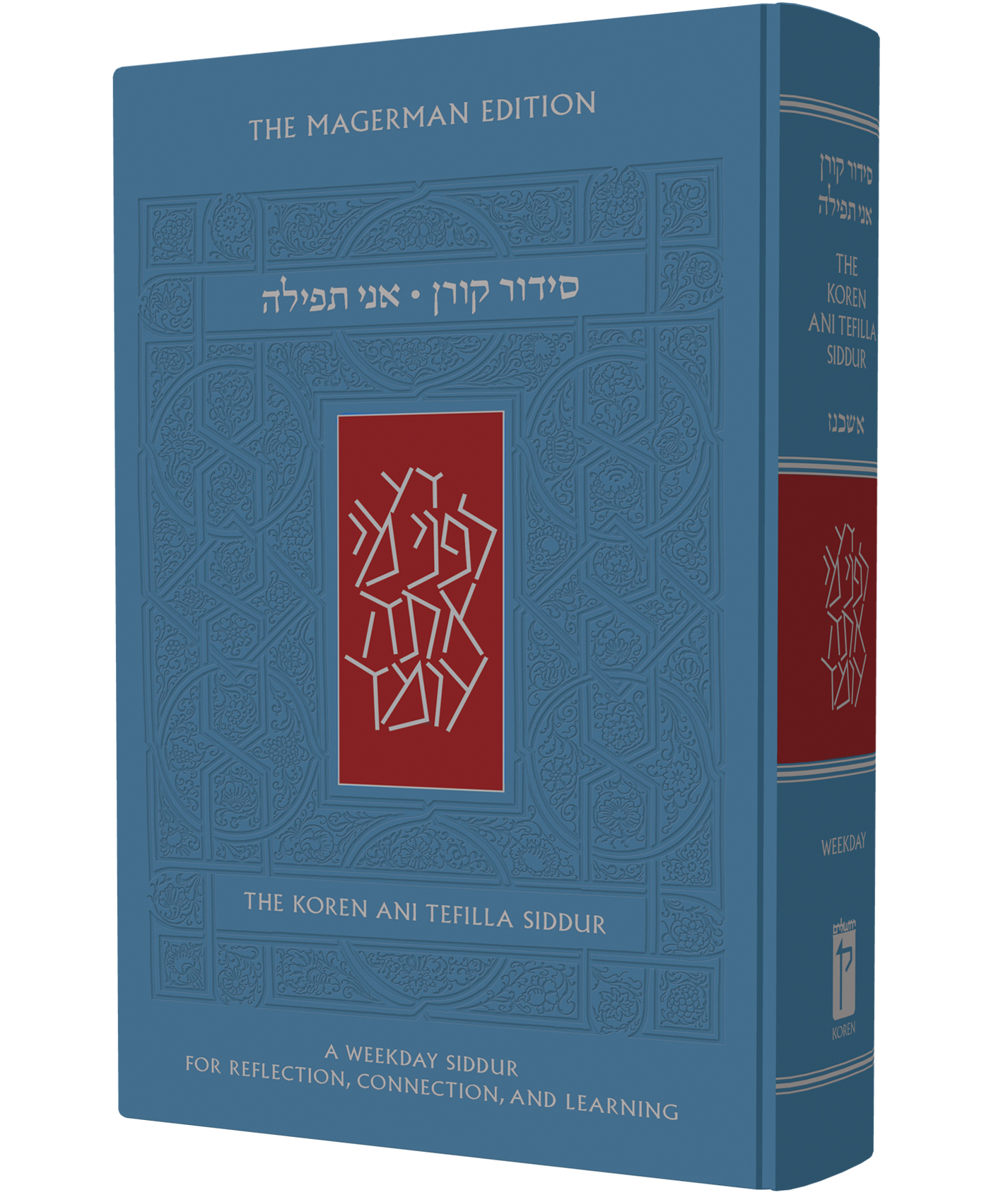
Review of Koren’s New Youth Siddurim

Feb. 2015 update: I just saw a friend’s newer copy of the Ani Tefillah Siddur, and was pleased to see that it includes Chol Hamoed, including full services for Hoshana Rabbah and Hoshanot. So those critiques in my review should be disregarded.

As I have been critical in the past (link) of Koren’s work, I think it is only fair to highlight a new project they have undertaken for which they deserve a wealth of credit and praise. Full copies of their two new youth Siddurim (link) were given out at the #IJed #Conference (link) that I #attended this past week. One Siddur is designed for Kindergarten-2nd grade; the other is intended for high school students. Two more Siddurim, one for upper elementary grades and one for middle school, are in process. This review is based on my experience with complete copies of the two new Siddurim currently available.

1) Koren Youth Siddur.

Koren K-2This is a graphically pleasing Siddur for Kindergarten-2nd grade which attempts to engage the students’ hearts and minds in the Tefillah experience. The numbered lines and carefully chosen pictures will be a great help to many teachers, especially those who take the time to read and make use of the extensive teacher’s guide.

What disappoints me about this Siddur, besides its omission of most of Ashrei and the vast majority of Shemoneh Esrei and sometimes sporadic inclusion of other Tefillot, is the fact it largely falls short of its potential as an educational tool. Perhaps their upper elementary Siddur will highlight recurring Shorashim or include a basic translation of the Tefillot, but I think those would have been worthwhile innovations even for this first effort. Looking at this growing series as a continuum, it would have been exciting to see a very basic tier of Shorashim, prefixes, and suffixes highlighted in representative colors throughout the text, with translations of the Shosharim in a list at the back of the Siddur, and with more advanced tiers of words highlighted in the succeeding volumes. Perhaps the potential of having four Siddurim could lie, in part, in integrating the graduated rudiments of an Ivrit curriculum rather than viewing Tefillah as its own course of study divorced – although it always has been so – from the students’ burgeoning study of Ivrit.

That said, the pictures and reflection exercises have been chosen with ample taste and with attention to the themes in the Tefillot, and that is a welcome and creative innovation. I am confident that many of our schools will adopt this new Siddur for our younger grades, and it has many advantages over the standard “Chinuch Siddur” currently being used in our schools.

2) The Koren Ani Tefilla Siddur.

Koren Siddur HS

Koren found the right collaborator in Rabbi Jay Goldmintz, the principal of the upper school of Ramaz but, more to the point, someone who has invested tremendous energy on studying how Tefillah affects teenagers (link). What Rabbi Goldmintz has created here is a work of genius, in the classical sense of its being obvious in retrospect but nearly impossible for most of us to have arrived at in prospect. The revolutionary multi-tier commentary is divided into Biur Tefillah, Hilchot Tefillah, Iyun Tefillah and Ani Tefillah (the latter comprising often scintillating and surprisingly personal thoughts and reflections), thus allowing the user to connect to Tefillah as she or he feels most comfortable on a given day.

The commentary, both in content and style, has been written with careful attention to high school students, which can be a difficult demographic to get a handle on, particularly as they relate to Tefillah. The work Rabbi Goldmintz has done on Shemoneh Esrei of Shacharit is simply astounding, and, creatively, Shemoneh Esrei of Mincha has been left blank to allow for notes and reflections by students. Each of the three Shemoneh Esrei prayers can be used for any weekday Tefillah service (although, seemingly by accident, Shalom Rav was left out of Shacharit). To each Aliyah of the weekday Torah readings in the back of the Siddur, Rabbi Goldmintz has added thought questions to keep students focused at a difficult time in the service. This Siddur is visually and intellectually addictive; I started using it out of curiosity, but I believe I may have found a Siddur for life.

So how could the best be made even better? A few notes of suggestion. In my work developing a Tefillah curriculum for 6th graders (link), I have found an important part of our learning to be Seder HaTefillah, the order of the various Tefillot and how each contributes to a logical and inspiring whole. Rabbi Goldmintz seems to agree; in his introduction he displays two such models graphically. I would like to see more of that kind of thinking throughout the Siddur, because understanding each Tefillah on its own misses a large part of the puzzle that is Shacharit. The graphics in the introduction could be reintroduced at appropriate parts of the Shacharit service, such as when a major step forward is taking place, and a “Seder Hatefillah” section could be added to the commentary so that every Tefillah could be contextualized in this way using words, if not pictures. Perhaps Iyun Tefillah and Ani Tefillah could be combined to prevent there being too many sections on the page.

I also think that this Siddur could afford to go on a diet, with a lot of girth taken up by what seem to be arbitrary selections in the second half. Do we need the prayer after childbirth (p. 622) or the Chanukat Habayit service (p. 598)? Do we need the entire Yom Tov Pesukei Dezimrah (484-511), for the benefit of the minuscule number of people who recite it on Yom Haatzmaut? Ironically, despite its being over 800 pages, there was no room in this weekday Siddur for the Chol Hamoed Mussaf or Hoshanot. Are we really ready to cash in Chol Hamoed for Yom Ha’atzmaut? That seems to have been at least a semiconscious decision by Koren. Along the same lines, the Siddur could be made Motzei Shabbat-friendly with relatively little effort on Koren’s part. I would also like to see more commentary, if only brief introductions, to more of the sections in the second half of the Siddur.

I have long noticed a chasm in the Jewish publishing world between youth and adults, who are more than well served, and teenagers, who have been largely neglected. Virtually no specialized Torah publications exist for that critical demographic, one that often is interested in learning and has money to spend on plenty of less consequential matters. When I first saw Rabbi Akiva Tatz’s “A Thinking Jewish Teenager’s Guide to Life” (link), I thought we may have turned a corner and would start to see more publications geared toward teenagers, but that was not to be. Perhaps what makes me so excited about Rabbi Goldmintz’s Siddur is that with teenagers under watch by the newly resurgent Koren, we now have another opportunity to turn that corner. A teenagers’ Chumash, volumes of Gemara, Jewish history – there is a world of opportunity if the Jewish publishing apparatus is ready to take the chance. For the sake of my students at least, I hope they will.

Posted in Communal Matters, Jewish Education (meta), Tefillah | Leave a comment

United We Fall, Divided We Stand: The Complicated Legacy of Aharon

Who was Aharon?

Certainly, if one were to write a biography of our first Kohen Gadol, this week’s Parsha of Ki Tisa would play a prominent role. Yet Aharon’s role in the story of the Chet Ha’egel (Golden Calf) is as complicated and complex as his legacy overall. The Aharon we know from Pirkei Avot, the “Ohev Shalom V’Rodef Shalom,” the lover and pursuer of peace, appears largely absent from the written record. The Chet Ha’egel, Mei Merieva (the watering rock, where he is ruled inelegible to enter the Land of Israel), the story (Bamidbar 12) in which Aharon tattles on Moshe and his Kushi wife, and the account of Nadav and Avihu’s death (where Aharon is chastised by Moshe for his response) all paint a portrait of Aharon that is at best nuanced and at worst problematic. He appears to vacillate between regrettable gaffe and outsized recognition, as he does here when, chronologically, the Chet Ha’egel is followed by Aharon’s being fitted for his royal vestments.

More specifically, in this week’s Parsha, Aharon takes it upon himself to create a bait-and-switch that would seem to cloud his legacy of love and peace:

שמות פרק לב פסוק ב
וַיֹּאמֶר אֲלֵהֶם אַהֲרֹן פָּרְקוּ נִזְמֵי הַזָּהָב אֲשֶׁר בְּאָזְנֵי נְשֵׁיכֶם בְּנֵיכֶם וּבְנֹתֵיכֶם וְהָבִיאוּ אֵלָי:

רש”י – פרק לב פסוק ב
באזני נשיכם: אמר אהרן בלבו, “הנשים והילדים חסים על תכשיטיהן, שמא יתעכב הדבר, ובתוך כך יבא משה.” והם לא המתינו, ופרקו מעל עצמן:

Aharon’s plan was to create a diversion tactic that would lead to a day or more of widespread familial strife. Hardly the same Aharon that we meet later, at the time of his death:

במדבר פרק כ פסוק כט
כט. וַיִּרְאוּ כָּל הָעֵדָה כִּי גָוַע אַהֲרֹן וַיִּבְכּוּ אֶת אַהֲרֹן שְׁלשִׁים יוֹם כֹּל בֵּית יִשְׂרָאֵל:

רש”י – במדבר פרק כ פסוק כט
כל בית ישראל: האנשים והנשים, לפי שהיה אהרן רודף שלום ומטיל אהבה בין בעלי מריבה ובין איש לאשתו:

Avot D’Rebbi Nattan expands on this story, explaining how Aharon would fictitiously tell feuding spouses that the other spouse wanted to make up in order to end strife and bring about renewed matrimonial harmony. But that story, and this Rashi, seem very different from the Aharon in this week’s Parsha who creates enmity among spouses to delay the creation of the calf.

Perhaps in order to better understand the character of Aharon, we need to take a broader view of Parshat Ki Tisa, which contains several seemingly unrelated stories. In the Parsha’s opening account of the census, the half-shekel requirement can perhaps best be understand as the creation of yesh mei’ayin, something from nothing. While each person can accomplish nothing with only his own half shekel, tremendous potential is unleashed by its addition to a collection of other ones. Yet that same message can be misapplied, as the Jews learn in the later story of the Chet Ha’Egel, when the very same unity leads to disarray and disaster. Think of the Dor Haflaggah, the generation which built the Tower of Bavel, which followed the Dor HaMabbul, the Generation of the Flood, back in Parshat Noach. Although their sinning against God was treated with greater leniency than their fathers’ sinning against each other, and so they were dispersed rather than destroyed, the latter generation still had not achieved unity for a constructive purpose and so were punished. Their descendents in Ki Tisa, as well, misunderstood the message implied by the half shekel, instead utilizing unity for a destructive purpose.

The metamorphosis of the Jewish People parallels that of Aharon, whose opposite and equally negative change causes him to realize that not all love is warranted. When the cause for unity is negative, the impulse towards love and acceptance must change. At that point, it behooves Aharon to create familial strife in order to preserve the health of the Nation. Avraham, the Ish Chesed, was forced into a similar struggle when he was ordered to bind Yitzchak as an offering. Yaakov, the Ish Emmet, was forced to lie to and deceive his father. It seems that the ultimate test of having a middah is knowing when not to have it, when to put it away because to do so, at that moment, is as much the will of God as it is to exercise that middah the rest of the time. Aharon, as well, needed to know not just when to exercise his trait of Ahavah, but when not to do so.

Sandwiching the Parsha’s outermost stories are the description of the כיור, the Priestly sink, and Shabbat. The first seems terribly out of place, coming two Parshiot after the description of most of the Mishkan’s other artifacts. Equally surprising is that before we are told anything substantial about the כיור, we are told something that we are never told about any of the other vessels: its location, halfway between the Ohel Moed and the Mizbeach. Which brings to mind the question: why is the Mizbeach outside of the Ohel Moed at all? Why not extend the walls of the Ohel Moed to include the Mizbeach? But being halfway between the Ohel Moed and the Mizbeach is important because it represents a compromise between the creativity and input invited by the Mizbeach and the top-down prescription of spirituality mandated by the Mishkan. There are times when our own ingenuity is welcomed and even critical, when it is ours to find and utilize the emotional cache that makes us each who we are, whether it is the chesed of Avraham or the ahava of Aharon or whatever strength makes each of us unique. But there are also times when we are called upon to stand in place, like the other vessels of the Ohel Moed, and be told what to do, even if it means uncomfortably suspending the very trait which makes us feel most comfortable. Shabbat, likewise, is famously a day which is חצי לה’, חצי לכם, containing elements through which we are encouraged to create our own form of spirituality and others through which it is prescribed for us.

The test is complex for each of us. We are given talents, unique portals through which to access spirituality. And we are told that, at times, these very portals are to be closed in deference to a differing dictate by the Creator. In Aharon’s case, being an Ohev Yisrael all of the time would have stood in contradistinction to the very God he would have been professing to serve through that Ahava. I once heard from an old Rabbi in Yerushalayim that any Jewish book using the term “Ahavat Chinam” is not a real sefer. “We tried Ahavat Chinam back in the ’60’s – free love – and it wasn’t too successful!” A healthy dose of skepticism may not always be a bad ingredient to mix in with our Ahavat Yisrael. As Shlomo Hamelech said, “עת לאהוב, ועת לשנוא.”

As our lives vacillate between the soothing certainty of the Ohel Moed and the uncomfortable coldness of feeling its door slam behind us as we stand outside the Mishkan and need to make our own choices, we must realize when the time has come to suspend our own judgment in favor of Hashem’s. As they say, “Everything in moderation, including moderation.” No middah, however good, ever deserves to be divorced from the scrutiny brought upon it from our Maker Whom we use it to serve. Knowing when we have left the Ohel Moed and entered into the realm of self-definition, however, is a challenge that stands for a lifetime.

Posted in Parshat Hashavua | Leave a comment

I Have Seen the Future of Jewish Education, and It Is Us

A great deal has been made lately of the latest in Jewish educational technology, a sweeping program called Mercava.

I have written frequently on this blog about the importance of integrating technology in the Judaic studies classroom and have broadly championed such platforms as Google, Bar Ilan, and even ComicBuilder for creating immersive classroom environments, but I have misgivings about Mercava that I would like to air.

Before I share those misgivings, however, I must say that this appears to be the work of a highly dedicated group of people whom I believe care passionately about the Jewish people and believe sincerely that, without their work, our future is doomed. And beyond believing in the sincerity of these individuals, I wish that more people in the larger Jewish community shared their passion and energy. Our community would be a far better place if more of its members took on issues that they believed to be of importance and worked with such commitment to find solutions to those problems. Kol Hakavod to this group of innovative, envelope-pushing pioneers.

That said, nearly six years into my career as a classroom learning facilitator, I have begun to realize that there are two kinds of technology: the kind that is in the service of education, and the kind that asks education to serve it. The operative question: what is the driver and what is the passenger? Technology is healthy, but not as the catalyst for why we teach or learn to begin with. Mercava has gone beyond integration of technology to make technology the raison d’etre for why we teach and learn at all. When their promotional video opens by saying that “The most immediate challenge we face as educators … is that [children] are used to information coming at them very rapidly,” we are being introduced to a reactive, inwardly-focused module which is essentially a rebranding of the anachronism “technology for technology’s sake.” Although Mercava has updated that cliche to reflect their belief that technology is the only way to save our children and Torah itself from calamity, the two are essentially the same. This is technology that is served by education rather than serving it. Certainly there are great uses for technology – I use it in the classroom every day – but short of using it simply because it is technology, I use it because it is what happens to work best in those situations. This program takes as its starting point that technology itself is the answer, almost whatever that technology is and whatever it does, simply because it is technology. Rather than using knowledge, skills, or curriculum as a starting point and then integrating bold new technology where appropriate, Mercava has recast the entire purpose of education as being to bombard students with some sort of technology, and then they have worked outwardly to devise ways in which this technology can also, perhaps, educate. In my opinion, that is a backwards way to plan a curriculum or lesson.

What is “technology in the service of education?” Here is a screenshot.

Screenshot DEAL 7th Winter

The students’ names on the left were omitted to protect their privacy, but the points, totals, and averages are real. What you are looking at is a snapshot of DEAL, Drop Everything and Learn, a new platform innovated at my school to encourage independent learning by our students. More specifically, you are looking at how one group of students spent their recent Winter Break, and the choices that they made amid the myriad temptations in their lives. Numbers the students entered into the various subject columns resulted in the auto-generated “Totals” because Google was taught, using formulas, to calculate each Mishna as two points, each Amud of Gemara as ten points, each Perek of Tanach as five points, each hour spent listening to an online Shiur as three points, and so on. What was left to the students was to enter their learning by Perek, hour, or page, as each column requests. Because they were in competition with each other and with students in two other classes for individual prizes (Amazon gift cards), class prizes (Slurpees), and an ice cream party (for anyone who earned 50 points), the results were rather impressive. Because of the program’s integration of technology, the students were able to track their own learning, keep tabs on competitors, encourage friends in the same class to keep up, and build justifiable pride in their accomplishments’ being broadcast for others to see in real time. And because the program stressed independent, optional learning, it is, we believe, the beginning of a lifetime of learning in the only way they will ever do it – because they choose to. We are creating a culture of learners, an atmosphere of learning that goes far beyond the classroom and encourages the students to see learning as a real-life activity even right now. This is a snapshot of technology serving our meta-educational goal by creating a tool to get us where we already knew we wanted to go.

So to the “psychology of eating specialist” near the beginning of the video who tells us that, from her vantage point, “the current educational system – it’s not working for a generation of children who are used to getting immediate gratification,” I would respond as a Seattle-based teacher did today in an educators’ forum: “My students are not bored. My students love my class and look forward to their Jewish learning each day. They love the projects, the skits they write, the songs they write and perform, the debates, the interactive recreation of our history and stories. Bringing these stories and teachings to life for 21st century kids requires speaking their language and making it meaningful to them – but that doesn’t mean reducing it to a soundbite like the rest of their life.” I agree. But what I would add is that what makes the Seattle educator’s classroom hum is that she begins with curriculum and then adds technology as needed – again, “technology in the service of education.” As in every profession, a good educator integrates whatever tools are needed to do the job – technology, calisthenics, dramatization, projects, modeling, games. But those tools are added to service the education that has already been envisioned, not to provide its very backbone.

I also notice that the Seattle teacher stresses all the things that the students themselves are doing – “the skits they write, the songs they write and perform.” In my experience, student creation and student choice are what build both short-term buy-in and long-term results. I do not see an emphasis on either of those by Mercava, although technology could be used that way. Here, for example, is a student of mine a few weeks ago using Google Sketch to create her own digital re-creation of the Mishkan based on her own learning of Chumash and Rashi:

?????????????????????????????????????????????????????????????

And here is a student who preferred to work on the same project, at the same table, the old-fashioned way:

?????????????????????????????????????????????????????????????

And here is the work of a student who completed the same project last year in a very different way:

??????????????????????????????????????????????????????????????????????

As others have noted in educators’ forums, the video seems to show things being done for students – such as breaking down, color-coding or translating Gemara – things which, if done for them, do not encourage students to become skilled learners or to feel good about their abilities or skills. It seems like there is an emphasis on end-product, but not on process. In our throwing technology at them to save their souls from being lost by being device-less for part of their day, our students are not necessarily becoming more skilled or knowledgeable. And some combination of those, even today, is power.

A month ago my eighth grade Gemara learners had a great question related to Beit Din, so I emailed the question to a noted Dayan in New York. From the admirable display of interactivity with other learners and teachers around the world, I see that, for a moment at least, it is important to Mercava that students have such questions. Is this method better than sending an email, just because it’s more eye-popping? And will the Rav on the other end of the line care to respond? But more importantly than either of those questions, will the rest of the Mercava experience encourage that kind of questioning? I don’t see the kind of prodding of deep thinking that would lead to that.

I also do not buy into the doomsday prediction that, “by not acting, we will lose at least an entire generation of children – of Jewish children – at least!” I do not believe that this is our last chance, and that if we do not throw technology at the students in every conceivable way, Torah will be lost from the Jewish people forever. Dark background music and evocative grayscale photos notwithstanding, this video does not convince me that we are in the throes of a grave, apocalyptic crisis. Great things are happening in classrooms all across this country, and Jewish education has, partly but not entirely because of smartly-used technology, improved dramatically since I was a child in its retention and engagement of students and in its transformation of students into learners. Visiting the contemporary American Jewish school, one could find classrooms full of engaged, productive students, enjoying and gaining from their learning even without being constantly attached to devices. I give students and my colleagues around the country credit – and, for that matter, I give Torah itself credit – that we can put down our devices sometimes and experience life in other ways. I am glad that when I was growing up, my teachers credited my classmates and me with having enough sense to know the difference between the TV and movies we watched endlessly and the Torah that we learned in school. We knew there was a difference, and we expected there to be a difference. We didn’t need Torah to perfectly reflect the banalities of the world around us in order to be worthwhile – that, in fact, perhaps just the opposite was true. I have found my students today to understand, as well, that there is a difference between the world around us and their Torah learning. They appreciate that, at times, there can be an integration of those two worlds, and that is well and good; but they are also not confounded or antagonistic when those worlds cannot be integrated.

Where technology augments Torah, that is wonderful. Where technology is an end in and of itself, I take that to be a defensive posture that Torah is not strong enough to withstand the way we spend the rest of our lives, and I disagree. I find that students actually still respond to Ameilut when it is encouraged of them, and technology can often help with that, but not when technology obfuscates the need for Ameilut by saying that the answers are already there for the taking. As another blogger noted recently in an otherwise positive review of Mercava:

“The only features which I am not so excited about, which ironically are a major selling point in their promotional video, are the many embedded pictures and animations. This is one area where I differ from the vision of the Mercava. While I think pictures and videos about what is going on in the Gemara can be helpful at times, it will never make the Gemara a better learning tool. I think that good learning is messy. Kids learn best when they use their imagination and the teacher invites the student to interact directly with the text not a slick Disney-like video cartoon. They need to find inconsistencies and seek out ways to resolve them; to see a halachic statement and attempt to discover the universal principle on which it is based. As has been proven by the exhaustive research of Larry Cuban, making learning more like TV and movies with videos and cartoons does not make for better learning. It might be a temporary motivational boost but that will quickly wear off. Only real thought provoking activities will keep our students engaged and help them to fall in love with the learning as we have.”

I will end as I began, in praise of these mighty warriors who are admirably battling Jewish ignorance and indifference in the best way they know how. I, for one, while rarely adapting any new program at face value, am always open to ideas from all quarters, and I am sure my classroom will benefit from this, if in some way less grand than its creators envision. I am also sure Mercava will get many buyers, and I am just as sure that Torah will survive with or without it; if Torah is strong enough to survive without an unparalleled bombardment of technology, it is also strong enough to survive with it. That is my opinion, but don’t take my word for it – I’ve never worked for Disney.

Posted in Classroom Experiences, Communal Matters, Jewish Education (meta) | Leave a comment

The Jew-Brew, Part 2 – Yitzchak’s Prayer: Human Intimacy as Metaphor for Divine Connection

Previously we have explored the role of faith in the creation of the Jewish People. What other ingredients needed to be discovered and added to the embryo that would eventually develop into our Nation?

Let’s proceed further into Parshat Toldot:

בראשית פרק כה
(יט) וְאֵלֶּה תּוֹלְדֹת יִצְחָק בֶּן אַבְרָהָם אַבְרָהָם הוֹלִיד אֶת יִצְחָק: (כ) וַיְהִי יִצְחָק בֶּן אַרְבָּעִים שָׁנָה בְּקַחְתּוֹ אֶת רִבְקָה בַּת בְּתוּאֵל הָאֲרַמִּי מִפַּדַּן אֲרָם אֲחוֹת לָבָן הָאֲרַמִּי לוֹ לְאִשָּׁה: (כא) וַיֶּעְתַּר יִצְחָק לַה’ לְנֹכַח אִשְׁתּוֹ כִּי עֲקָרָה הִוא וַיֵּעָתֶר לוֹ ה’ וַתַּהַר רִבְקָה אִשְׁתּוֹ:

While we can assume that the root עתר has something to do with prayer, it is not clear what exactly this term is meant to connote or why it is used here in place of some of the more common prayer-words – פלל, פגע, and צעק come to mind. Moreover, the dual use of the term in relation to both Yitzchak’s action and Hashem’s corresponding action is perplexing – what is it that each would do to the other that would make the Pasuk read smoothly? And a final question: Throughout all of Avraham and Sarah’s long period spent waiting for a child, why don’t we ever see them simply ask Hashem for one? Why does prayer only enter the equation with the introduction of Yitzchak and Rivka?

In order to understand the concept of עתר and its symbiosis between Yitzchak and Hashem, we need to consider a Rashi on the relative locations of Yitzchak and Rivka:

רש”י בראשית פרק כה
לנכח אשתו – זה עומד בזוית זו ומתפלל, וזו עומדת בזוית זו ומתפללת:

With Yitzchak and Rivka far apart, the operative relationship in the Pasuk is left to occur between Yitzchak and Hashem. Their connection was of a sort that had never before been made between man and Creator, a fusion known as עתר. Like two humans experiencing the most intense moment of intimacy, Yitzchak and Hashem connected electrically at that moment. And suddenly, in the very same Pasuk, ותהר – Rivka was pregnant.

A glimpse of Tefillah as viewed through the prism of this most intense, most singular experience is described by Rav Schwab in Rav Schwab on Prayer. Rav Schwab wonders what is so wonderful about connecting גאל ישראל (the Beracha before Shemoneh Esrei) with Shemoneh Esrei as to lead the Gemara to declare that הסומך גאולה לתפילה מביא גאולה לעולם, one who connects Geulah to Tefillah brings redemption to the world. Rav Schwab suggests that we redefine the term גואל. As used throughout Chumash (see, for example, the beginning of Perek 5 of Bamidbar), the term does not mean redeemer as much as it means stand-in, substitute, or replacement. At the moment that we refer to Hashem as גאל ישראל, we declare Hashem to be the One who would stand in for us in any situation. If, at that very moment, we too declare that we would do anything in the world for Hashem – that we would sacrifice our very lives to Him as the Tamid sacrifice for which the weekday Shemoneh Esrei substitutes – then a singular, electric fusion has been made between man and Creator, one which will מביא גאולה לעולם. Easier said than done; no surprise that even the great Amoraim viewed such as a fusion as a near-impossibility! Yet who better to model Tefillah through the prism of self-sacrifice than Yitzchak, who literally spent time on a Mizbeach?

This fusion, one which can only be experienced humanly at the moment of the greatest conjugal pleasure, is modeled for us in the relationship of Yitzchak and Hashem at the moment at which Yitzchak עתרed to Hashem and Hashem עתרed back. That this is the very first time Tefillah is introduced, that it is the model for us of what Tefillah is intended to be, is not a surprise. Avraham and Sarah related to Hashem in a way that was too human to allow for intimate conversation of the sort Yitzchak innovates here. Avraham bantered with Hashem about Sedom; Sarah laughed at Hashem’s promise of granting her a son. This may have been a necessary outgrowth of Avraham’s having rediscovered Hashem in a lost universe, the only way Hashem could be salvaged from total neglect, but it took Yitzchak to find a way by which the rest of us could relate to Hashem: through the metaphor of human intimacy. Accessing that model of Tefillah in our own lives would מביא גאולה לעולם, just as, in its initial invocation, it brought גאולה לעולם through the immediate conception of Yaakov.

In fact, the Midrash goes farther than Rashi in describing the intimacy implied by our Pasuk:

בראשית רבה (וילנא) פרשה סג
לנכח אשתו – מלמד, שהיה יצחק שטוח (lying flat on the floor) כאן, והיא שטוחה כאן …
ויעתר לו ה’ – רבי לוי אמר, משל לבן מלכים שהיה חותר על אביו ליטול ליטרא של זהב, והיה זה חותר (dig) מבפנים, וזה חותר מבחוץ. שכן בערביא קורין לחתירתא (breaching; penetration) עתירתא.

It is hard to say whether Rashi, aware of Christian overtones, deliberately stands our characters up (זה עומד בזוית זו ומתפלל, וזו עומדת בזוית זו ומתפללת) rather than leave them lying on the floor in order to avoid the possibility of our Pasuk being misconstrued as a virgin birth. Either way, the Midrashic use of זה חותר מבפנים וזה חותר מבחוץ seems to imply an equal and opposite use of force by the two parties involved, which again negates a simplistic definition for עתר such as “pray” or “beg” and allows for a metaphor of human intimacy of the type we described earlier.

The kind of interaction that Avraham and Sarah had with Hashem was not instructive, not a model; while it is a testament to their own greatness, it was never replicated or even held as an ideal in future paradigms of human-Divine interaction. The paradigm of prayer as חיתורא, penetration – intimate, symbiotic commitment, modeled by the man known in Kabbalistic literature as יצחק עקידתא, Yitzchak the eternally bound one – is a lofty goal, but one that is narrowly within our grasp. Yitzchak’s sacrificial Akeidah experience has as its logical extension a model of Tefillah which replicates that sacrifice and translates it into a form which, with a lifetime of work ahead of us, we can each aspire to reach.

Posted in Parshat Hashavua | Leave a comment

Parshat Shoftim: The Punishment of Not Being Punished

Parshat Shoftim includes a dire warning for those idol-worshiping nations with whom the Jews are unable to establish a peace treaty:

דברים פרק כ
(יג) … וּנְתָנָהּ ה’ אֱלֹהֶיךָ בְּיָדֶךָ וְהִכִּיתָ אֶת כָּל זְכוּרָהּ לְפִי חָרֶב: (יד) רַק הַנָּשִׁים וְהַטַּף וְהַבְּהֵמָה וְכֹל אֲשֶׁר יִהְיֶה בָעִיר כָּל שְׁלָלָהּ תָּבֹז לָךְ וְאָכַלְתָּ אֶת שְׁלַל אֹיְבֶיךָ אֲשֶׁר נָתַן ה’ אֱלֹהֶיךָ לָךְ: … (טז) רַק מֵעָרֵי הָעַמִּים הָאֵלֶּה אֲשֶׁר ה’ אֱלֹהֶיךָ נֹתֵן לְךָ נַחֲלָה לֹא תְחַיֶּה כָּל נְשָׁמָה: (יז) כִּי הַחֲרֵם תַּחֲרִימֵם הַחִתִּי וְהָאֱמֹרִי הַכְּנַעֲנִי וְהַפְּרִזִּי הַחִוִּי וְהַיְבוּסִי כַּאֲשֶׁר צִוְּךָ ה’ אֱלֹהֶיךָ:

Total havoc and wanton destruction. Except for one thing …

(יט) … לֹא תַשְׁחִית אֶת עֵצָהּ לִנְדֹּחַ עָלָיו גַּרְזֶן כִּי מִמֶּנּוּ תֹאכֵל וְאֹתוֹ לֹא תִכְרֹת כִּי הָאָדָם עֵץ הַשָּׂדֶה לָבֹא מִפָּנֶיךָ בַּמָּצוֹר: (כ) רַק עֵץ אֲשֶׁר תֵּדַע כִּי לֹא עֵץ מַאֲכָל הוּא אֹתוֹ תַשְׁחִית וְכָרָתָּ וּבָנִיתָ מָצוֹר עַל הָעִיר אֲשֶׁר הִוא עֹשָׂה עִמְּךָ מִלְחָמָה עַד רִדְתָּהּ:

Fruit trees. Who would have thought? Of all the things to preserve. That perplexity has been dealt with extensively by the commentaries on the Chumash. But what perhaps makes the question stronger is that this is not the first time we have met fruit trees in Chumash:

בראשית פרק א
(יא) וַיֹּאמֶר אֱלֹהִים תַּדְשֵׁא הָאָרֶץ דֶּשֶׁא עֵשֶׂב מַזְרִיעַ זֶרַע עֵץ פְּרִי עֹשֶׂה פְּרִי לְמִינוֹ אֲשֶׁר זַרְעוֹ בוֹ עַל הָאָרֶץ וַיְהִי כֵן:

Hashem ordered fruit trees that would themselves taste like fruit – edible trees. But the trees disobeyed, as we see in the very next Pasuk:

(יב) וַתּוֹצֵא הָאָרֶץ דֶּשֶׁא עֵשֶׂב מַזְרִיעַ זֶרַע לְמִינֵהוּ וְעֵץ עֹשֶׂה פְּרִי אֲשֶׁר זַרְעוֹ בוֹ לְמִינֵהוּ וַיַּרְא אֱלֹהִים כִּי טוֹב:

Attentive to its own self-preservation, the tree offered its tasty fruit to the world while ensuring that it would not itself be eaten. Rashi points out the tree’s sin and consequence:

רש”י בראשית פרק א
(יא) עץ פרי – שיהא טעם העץ כטעם הפרי, והיא לא עשתה כן, אלא (פסוק יב) ותוצא הארץ עץ עושה פרי, ולא העץ פרי, לפיכך, כשנתקלל אדם על עונו, נפקדה גם היא על עונה, ונתקללה:

It is unclear to what later punishment Rashi refers, perhaps וְקוֹץ וְדַרְדַּר תַּצְמִיחַ לָךְ, but this is more a punishment to man than it is to the tree. Rashi’s hint that the punishments of man and tree are intertwined (“כשנתקלל אדם על עונו”) smacks of “כי האדם עץ השדה,” the elusive reason given in Parshat Shoftim as to why we should not cut down fruit trees. We will return to the man-tree relationship later.

Taking Rashi at his word that the tree was punished, its punishment is not conspicuous or overtly satisfying. The Nachash was made to crawl on its belly (“על גחונך תלך”); the moon was made small when it complained about two kings sharing the same crown. Now that the Jews are about to return to Israel, perhaps the fruit tree can finally receive its comeuppance – but Hashem says No, keep it around. Of all creations, this one has been disobeying Hashem since its creation! What gives? Why can’t we at least destroy it now, when we’re destroying everything else?!

A while ago I came across a fascinating article, “Bernie Madoff, Free at Last,” published in New York Magazine on June 6, 2010. The article paints an unexpected portrait of the man who made off with so many people’s money:

For Bernie Madoff, living a lie had once been a full-time job, which carried with it a constant, nagging anxiety. “It was a nightmare for me,” he told investigators, using the word over and over, as if he were the real victim. “I wish they caught me six years ago, eight years ago,” he said in a little-noticed interview with them.

And so prison offered Madoff a measure of relief. Even his first stop, the hellhole of Metropolitan Correctional Center (MCC), where he was locked down 23 hours a day, was a kind of asylum. He no longer had to fear the knock on the door that would signal “the jig was up,” as he put it. And he no longer had to express what he didn’t feel. Bernie could be himself.

Sometimes not being punished is a worse punishment than being punished. The relief, finality, and closure that come from punishment can be a cathartic experience. The punishment of the fruit tree is to not be punished, but to go through the rest of time wallowing in its own guilt, so to speak, unable to unburden itself of its past, correct its error, and move on. Picture a student who knows that his teacher knows that he cheated. The time spent waiting for the teacher to finally hand down the punishment can be worse than carrying the punishment out. The fruit tree, like Bernie all those years and the student burdened by his guilt and unable to deal with it constructively, does not have the benefit of moving on after the gift of the Teshvua process.

Man and tree are linked negatively in Bereishit (כשנתקלל אדם על עונו, נפקדה גם היא על עונה) and positively in Shoftim (כי האדם עץ השדה) because what the tree so sorely misses is the quality which most powerfully defines mankind. There is nothing more human than the need to move beyond one’s past transgressions, no feeling more satisfying than the sense that one has conquered his checkered past, survived, and can thrive once more. Maligned adulterous politicians who mount great comebacks know this; cheating athletes who take a suspension rather than spend years denying and equivocating know it as well. כשנתקלל אדם על עונו is an ambiguous notion not only because the tree wasn’t really punished but because Adam wasn’t really punished either – his punishment was to roam the earth in a puddle of his own guilt for hundreds of years. Chava, the Nachash, and the moon were punished more concretely – but Adam and the tree met a similar fate, that of the wandering, guilty soul consigned to feel bad but never really recover from what he has done. Neither had a Teshuva process. Neither had a Yom Kippur.

We enter Elul and the Aseret Yimei Teshuva, then, best with a sense that גילו ברעדה, rejoice in trembling, is not a statement of opposite emotions co-existing uneasily, but an expression of two halves of the same coin that exist in tandem. We rejoice because we can tremble. We take pleasure in the fact that we can have our day in court, plead our case before our Creator, develop a rehabilitation plan, and move on to Succot אך שמח, unburdened from our past. The student dreads the final exam, but he would not give up the feeling that he has the day after, assuming he believes he did well. When the Gemara describes Yom Kippur as one of the happiest days of the year, that is because the feeling of satisfaction that comes from forgiveness unburdens us in a way that no other day equivalently can. We are made human by our ability to do Teshuva. Adam, like the tree, could not do that; it is in that sense that they were punished (or not punished) together. The tree stands as an immortal legacy of the kind of burden that Adam carried for hundreds of years, and in this we share in the tree’s pain – כי האדם עץ השדה. But beyond Adam, unlike the tree, mankind has since discovered the liberating power of Teshuva and how freeing it can be. Mankind and the tree share a common origin, but man has come so far since those early days. We preserve the tree so that we can remember always that gulf between us and the liberating power of Teshuva that has made that gulf so wide.

May we strive to feel the embrace of Teshuva this year and every one after.

Posted in Parshat Hashavua, Rosh Hashana, Yom Kippur | Leave a comment

The Night Time is the Right Time: A Selichot Chronology

I gave a Shiur yesterday (sources are at this link) on what the right time is to say Selichot. Thank you to everyone who attended and contributed to the lively give-and-take. Some thoughts that came out of the Shiur:

1) The popular notion that Chatzot is the best time to say Selichot is not borne out by the research. Three options emerge from the original sources: a) There is a Gemara (Source 1) which cites Chatzot as the time at which the Jews in the Midbar felt a comforting wind; b) The Shulchan Aruch (OC 1:2) (Source 6) cites the ends of the night’s three subdivisions (measured between Tzeit and Alot) as effective for an individual’s beseeching Hashem because the Mishmarot (Temple watchmen) changed at those times; c) Rambam (Source 3) and the Shulchan Aruch (OC 581:1) (Source 4) cite Ashmoret, shortly before Alot, as the best time for a Shul to say Selichot this time of year, perhaps because, as the Magen Avraham explains (Source 5), Hashem visits the 18,000th world – ours – just before Alot. Of the three options, the third, Ashmoret, relates most specifically to when to say Selichot. Rav Moshe at first assumes that the Rambam prefers Ashmoret as a matter of convenience (Source 9-F); we noticed that 1 am in the Rambam’s time (when people slept roughly from 8 pm-5 am) was effectively the same as 3 am in ours. 4 am, on the other hand, slightly earlier than when people were waking up anyway, was a more realistic time to say Selichot back then, somewhat akin to our saying Selichot at Chatzot, around 1 am, slightly later than when most of us go to sleep. However, the Rambam’s use of Ashmoret and our use of Chatzot are not necessarily equal. Rav Moshe points out (Source 9-G), based on the wording in the Rambam, that two requirements are needed – “לקום” and “עד שיאור היום.” Although Rav Moshe glosses over this point, it doesn’t seem that either requirement is met by saying Selichot at Chatzot, unless one slept before that and continues saying Selichot for several hours. Saying Selichot at 6:15 am or thereabouts may at least fulfill one of those requirements, לקום. Rav Moshe does come somewhat close to this point (Source 9-M) when he notices that the Rambam’s preference for Ashmoret may be based less on convenience and more on fulfilling an ideal. To complete Rav Moshe’s thought: The Rambam could have never preferred Chatzot because even if at one point in history it fulfilled the mandate of לקום, it never fulfilled עד שיאור היום! Ashmoret, on the other hand, fulfilled both requirements in Rambam’s time and continues to do so today. This is why Ashmoret is cited by both Rambam and the Shulchan Aruch as the best time to say Selichot – not out of convenience, but because it fulfills both לקום and עד שיאור היום. Chatzot for us fulfills neither; 6:15 am fulfills one (לקום).

2) Rav Moshe (Source 9-K) cites the end of the first third of the period between Tzeit and Alot, around 11:20 pm, as a post-facto leniency for those who are scared (see Source 9-A) to leave their house any later. But we were shocked to notice during the Shiur that Rav Moshe slips (Source 9-M) and refers to this earlier time as Eit Ratzon (“אף שגם שליש הלילה הוא עת רצון”), which opens up a huge can of worms. If שליש הלילה is עת רצון, why wait until Chatzot, or 12:00, or 12:30? Ashmoret (4:00 am) is better because it is when Hashem visits our world, and it fulfills לקום and עד שיאיר היום. But 11:30 has a source in Shulchan Aruch (Source 6), while Chatzot does not, and apparently it is just as much an Eit Ratzon. Did Rav Moshe really mean to extend the boundaries of עת רצון that wide? And if so, why is 11:30 only acceptable בדיעבד? Might 11:30, שליש הלילה, in fact be preferable to 12:00 or 12:30; or does it usher in an extended period of time which in its entirety is equally acceptable, thus equating 11:30 with 12:30 and with Chatzot? Either way, it is hard to see any downside to 11:30, perhaps even לכתחילה.

In the final analysis, if 11:35 is, as Rav Moshe puts it, an עת רצון, then there is no reason to wait until 12:00 or 12:30 to say Selichot. If 11:35 is not an עת רצון, then neither is 12:00 or 12:30 or even one minute before Chatzot (as Rav Ovadiah would well agree). If 12:00 or 12:30 are עת רצון, then they only are so because 11:35 was! So there is no qualitative difference between 11:30 and 12:30, and no reason to prefer 12:00 or 12:30 over 11:30. If being after שליש הלילה is what grants 12:00 or 12:30 their עת רצון status, then why not say Selichot at שליש הלילה?

3) Rav Moshe’s final ranking (Source 9-M) is ambiguous. He tells us that Ashmoret beats שליש הלילה and that Ashmoret even beats Chatzot, but he never puts Ashmoret and שליש הלילה in a head-to-head matchup. One might assume that he prefers Chatzot based on Source 9-J, in which case the final ranking would be Chatzot-שליש-Ashmoret, but in Source 9-M he refers to שליש as an עת רצון and he admits that, according to the Shulchan Aruch, Tur, and Rash, “ליכא שום מעלה בחצות!” So again, a very powerful argument can be made for 11:30.

4) As the chart on the last page shows, Rav Ovadiah Yosef divides the 24-hour day into three sections – Ideal (Chatzot until Alot), acceptable (Alot until Neitz), and extremely dangerous (Neitz until Chatzot). Rav Ovadiah disagrees so strongly with starting any earlier than Chatzot that he quotes sources to the effect that it is preferable to not say Selichot at all (Source 10, paragraph beginning ואמנם). He advocates saying Selichot before Mincha rather than say them in the first half of the night (Source 10, paragraph beginning ומכל מקום). This struck many of us as odd, but there is a fundamental difference between his approach and that of Rav Moshe. The latter is interested in settling for a time that is not optimal, while Rav Ovadiah is searching for a time that is not destructive to the planet. Still, his not quoting שליש הלילה at all was somewhat surprising to us – it is, after all, cited by his beloved מחבר, if only for individuals, right there at the outset of Shulchan Aruch. If מי שנזדמן במקרה למקום שאומרים שם סליחות וי”ג מדות בתחילת הלילה, אל יצטרף עמהם באמירתם because the first half of the night is an עת התגברות הדינים, why would that apply only to public Selichot and not to an individual’s calling out to Hashem in his house any night of the year? How does Rav Ovadiah understand אורח חיים א:ב, and why is the public/private difference so monumental as to warrant one’s not even joining with a Tzibbur saying Selichot early?

Those are some thoughts related to this topic, but there is plenty more in the sources waiting to be discovered. ואידך, זיל גמור. Of course the comments are open to others’ insights and suggestions.

Posted in Communal Matters, Halacha | Leave a comment

Daf Yomi Resources – Pesachim 46

I taught the Daf today, Pesachim 46. Here are the resources for anyone out there who might be interested.

Daf Notes Pesachim 46

The second page might become its own blog post at some point. The assumption of the Poskim that a Mil is 18 minutes is difficult given the Gemara’s basing a Mil on the walk between Migdal Nuniah and Teveriah, which is a distance of 8 km., or 5 miles. I have a Facebook message in to an Israeli friend of mine who is both an archaeologist and a Talmid Chacham to see if he has any insight into this issue.

Posted in Talmud / Daf Yomi | Leave a comment